




Written by: Aaron Rovner, Founder, Saas Hero | Last updated: September 1, 2026
Key Takeaways for B2B SaaS Teams
- Heuristic evaluation is a fast, low-cost expert review method that identifies up to 75% of usability problems without recruiting real users.
- B2B SaaS websites need conversion-focused audits that connect findings to pipeline and revenue, not just generic usability violations.
- Top expert options range from methodology authorities like NN/g to specialized agencies like SaaSHero that fold audits directly into CRO and redesign work.
- Automated tools miss a large share of high-severity issues and work best as a supplement to human expertise for B2B buyer journeys.
- Ready to prioritize your SaaS website issues by revenue impact? Schedule a discovery call with SaaSHero.
What Is Heuristic Evaluation?
Heuristic evaluation is a usability inspection method where experts review a website against established principles (heuristics) to find potential usability problems. It offers a fast, low-cost way to catch issues before user testing. For a deeper look at the underlying framework, see our guide on heuristic analysis explained.
A single evaluator finds approximately 35% of usability problems, while five evaluators find around 75%. Three evaluators is the practical minimum for a tight budget. Five evaluators is usually optimal for cost-benefit. The method does not require recruiting real users, which makes it significantly faster and cheaper than formal usability testing.
The 6 Best Heuristic Evaluation Experts for Website UX Audits
The options below were evaluated based on methodology, B2B SaaS relevance, conversion focus, and deliverable quality.
1. SaaSHero: Best for B2B SaaS Companies
SaaSHero combines heuristic evaluation expertise with deep B2B SaaS conversion experience. Its team of approximately 20 full-time specialists includes in-house designers and copywriters who run heuristic evaluations as part of landing page optimization and CRO engagements. The team keeps all work in-house.
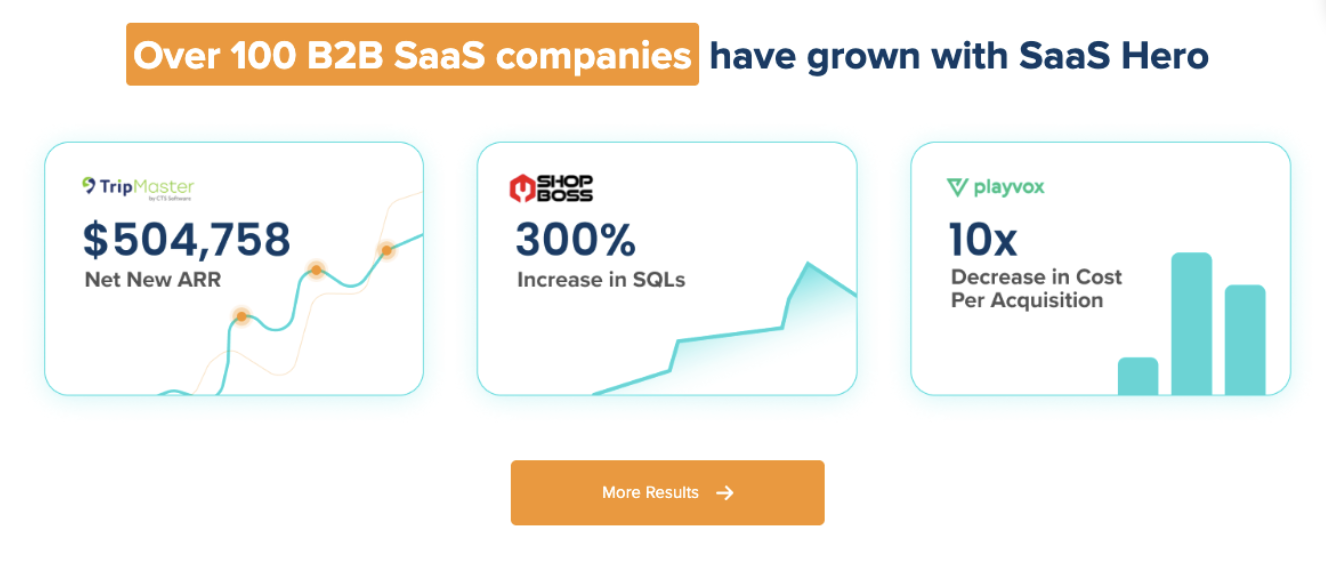
SaaSHero has managed over $60 million in lifetime ad spend for 100+ B2B companies, holds Google Premier Partner status (top 3% of agencies), and is a G2 High Performer ranked #20 of approximately 6,000 agencies. Its evaluations are aligned with CRM data such as qualified pipeline, lifecycle stage, and closed revenue rather than simple form-fill counts. For a B2B SaaS company, this approach means the audit prioritizes issues that affect pipeline and revenue.
The integrated model means a heuristic evaluation is not a standalone report. It feeds directly into A/B tests and landing page redesigns, with the same team owning paid media, creative, landing pages, and reporting. SaaSHero treats headline copy as the single highest-leverage lever on landing page conversion, and its audits reflect that commercial priority.

Talk with SaaSHero about a heuristic evaluation for your SaaS website.
2. Nielsen Norman Group (NN/g): Authority on Heuristic Methodology
Founded by Jakob Nielsen and Don Norman, NN/g is the gold standard for heuristic evaluation methodology. Their 10 heuristics are the industry benchmark, derived from Nielsen and Molich's original 1990 research. NN/g has assisted organizations across healthcare, finance, SaaS, and government, and their research reports are widely referenced across the UX industry.
NN/g fits teams that want the most authoritative, research-backed evaluation and have internal capacity to implement findings. Their training and certification programs are also industry-leading. Their evaluations focus on methodology rather than conversion. They identify usability issues but do not connect findings to revenue outcomes or provide ongoing CRO support.
3. Baymard Institute: Best for Research-Backed Audits
Baymard Institute is ranked #1 by UX Agencies for enterprise UX audits and is known for its extensive research base: 200,000+ hours of usability testing synthesized into 700+ best practice guidelines, benchmarked against 330+ leading sites. Clients include Sony, John Lewis, and Etsy.
Baymard's research-backed approach works well for SaaS companies with e-commerce-like flows such as self-serve checkout or subscription management. Their AI heuristic evaluation tool (UX-Ray) claims 95% accuracy in specialized testing. Their primary focus is e-commerce rather than B2B SaaS. Their audits are explicitly report-based and not redesign engagements. For complex B2B buyer journeys with multi-stakeholder decision-making, their heuristics may miss SaaS-specific conversion issues.
4. Cyber-Duck: Best for Enterprise Digital Audits
Cyber-Duck is a specialized UX agency offering expert-driven digital audits mapped to plain-English business recommendations. Their comprehensive UX audits combine heuristic evaluation with accessibility review (guaranteeing WCAG 2.2 AA compliance as standard) and analytics analysis. They produce severity-rated findings and prioritized roadmaps.
Cyber-Duck is a strong choice when you need a multi-layered audit that includes accessibility compliance alongside usability findings. Their expertise spans multiple industries and they are not B2B SaaS specialists. Their audits identify usability issues but may not rank findings by revenue impact in the way a SaaS-specific firm would.
Not sure which option fits your SaaS website? Get a recommendation on the right audit approach.
5. Fuselab Creative: Best for Hybrid UX Audits
Fuselab conducts comprehensive hybrid UX audits that blend expert heuristic inspections with data analytics and competitive benchmarking. Their methodology combines three diagnostic layers: heuristic evaluation, behavioral evidence such as heatmaps and session recordings, and conversion analytics. This approach gives a more complete picture than heuristic evaluation alone.
Fuselab fits teams that want an audit combining expert judgment with behavioral data. Their client base is diverse and B2B SaaS is not their exclusive focus. Their audits usually run as standalone projects rather than part of an ongoing growth partnership.
6. Independent Consultants: Best for Focused, Budget-Conscious Projects
A strong independent consultant can provide deep heuristic evaluation expertise at a lower cost than agencies. Senior freelancers charge $100–$200 per hour, with fixed-scope audits ranging from $3,000–$8,000. For a tightly scoped project, such as evaluating one critical flow, a senior independent consultant can deliver strong value.
The tradeoff is resourcing. Independent consultants usually lack the integrated team of designers, copywriters, and CRO specialists needed to implement findings. Your team must manage implementation internally, and the coordination burden lands on your marketing or product group.
Automated Tools and Their Limitations
Automated heuristic evaluation tools such as UX-Ray, Heurix, and UIXScore play a useful supporting role in a UX program. They excel at speed, consistency, and catching technical issues like contrast problems, missing alt text, and ARIA errors. For more on how these tools compare to human-led audits, see our guide on best heuristic analysis software for SaaS marketing.
The limitations are significant for B2B SaaS. Baymard's original GPT-4 test found only 19.9% accuracy in UX audit suggestions with an 80.1% false-positive rate. By 2025–2026, public tests improved to roughly 50–75% accuracy, meaning one in four findings may be wrong. Practitioners on forums like r/UXDesign consistently note that automated tools cannot replace human analytical context.
AI-only audits miss a large share of high-severity findings and misprioritize the remainder. For B2B SaaS, human expertise is irreplaceable because of the complexity of the buyer journey. Automated tools cannot evaluate whether a pricing page clearly communicates value to a buying committee. They also cannot judge whether the onboarding flow aligns with a sales-led motion, or whether trust signals appear where a skeptical economic buyer will actually see them. A hybrid approach works best. Use automation for broad scanning and human experts for contextual filtering and prioritization.
SaaS-Specific Considerations for Your Heuristic Evaluation
For B2B SaaS, the audit should prioritize conversion rate issues such as lead generation forms, pricing page clarity, and alignment with the sales cycle. A single audit finding that resolves a conversion barrier on a high-traffic page routinely generates returns that exceed the audit investment within 60–90 days. This focus pays off quickly when you target high-intent traffic.
Pricing pages deserve special attention. The audit should assess whether each tier clearly communicates what is included and whether a buying committee can understand the value proposition in under 30 seconds. On onboarding, a B2B SaaS case study on a self-serve analytics platform found high-severity issues such as weak feedback during data import, internal terminology, forced recall across screens, and vague error messages. These problems suppressed trial-to-paid conversion.

Generic usability heuristics often miss SaaS-specific conversion issues like trust signal placement, social proof positioning relative to the buying committee's concerns, and demo request friction. The audit should evaluate whether the website supports a multi-touch, multi-stakeholder buyer journey. Button labels matter, but support for the full decision process matters more.
How to Choose a Heuristic Evaluation Expert: The SaaSHero Hiring Checklist
This 10-point checklist helps you vet any heuristic evaluation expert or agency. It highlights the gap between generic usability reviewers and experts who can drive revenue outcomes.
- B2B SaaS experience: Have they conducted evaluations for companies like yours, with a sales-led, multi-touch buyer journey and $5k–$100k+ ACV?
- Conversion focus: Do they evaluate against conversion principles such as CRO heuristics from Peep Laja or MECLABS in addition to Nielsen's 10 heuristics?
- Methodology transparency: Can they explain their evaluation process, including how many evaluators they use and how they consolidate findings?
- Severity ratings: Do they use a standardized severity scale such as Nielsen's 0–4 and publish the rubric in the report?
- Prioritization by impact: Do they rank findings by business impact such as revenue, conversion, and pipeline rather than only by severity?
- Deliverable quality: Will they provide a sample report, and does it include screenshots, plain-English descriptions, and specific recommendations?
- Domain expertise: Do they understand your product type, such as multi-product SaaS or a PLG plus sales-led hybrid model?
- Communication style: Will you get a live walkthrough and debrief session, or only a PDF report?
- References: Can they share references from B2B SaaS clients with measurable outcomes?
- Post-audit support: Do they offer implementation support or A/B testing services, or does their involvement end with the report?
Red Flags to Avoid in UX Audit Providers
Experts who only provide a list of problems without prioritization produce reports that no one acts on. A 47-issue spreadsheet with no severity tiers feels like a complaint list rather than an action plan.
Providers without B2B SaaS experience often miss SaaS-specific conversion issues. A specialist in your model will find issues a generalist overlooks.
Teams that rely solely on automated tools produce audits that miss the high-severity findings mentioned earlier and misprioritize the remainder.
Auditors who ignore business goals deliver evaluations that list heuristic violations without connecting them to where users drop off or which conversion hurdles correlate with the problems.
Providers without a clear process are identifiable by red flags such as no itemized deliverables, findings held hostage to a redesign commitment, and promises of specific findings before reviewing the product.
What to Expect from a Professional Audit
A professional heuristic evaluation report should include an executive summary covering the top 3–5 findings with business impact, a full findings list with severity ratings, screenshots for every issue, the specific heuristic violated, plain-English descriptions, and a prioritized action plan. For a detailed breakdown of what a strong report looks like, see our guide on how to write a heuristic evaluation report.
Nielsen's severity scale runs 0–4:
- 0: not a usability problem
- 1: cosmetic
- 2: minor issue users can work around
- 3: significant problem that impairs task completion
- 4: usability catastrophe users cannot recover from
The severity rubric must appear in the report so the client can interrogate any score.
Every audit should end with a live presentation to stakeholders such as engineering, product, and design leadership. The session should open with the top three highest-severity findings and close with a prioritized roadmap. Audits that arrive as PDFs in shared drives without a presentation rarely change behavior.
FAQ: Heuristic Evaluation Experts for Website UX Audits
What is the difference between heuristic evaluation and user testing?
Heuristic evaluation is an expert-based inspection where 3–5 UX experts evaluate an interface against established usability principles, typically Nielsen's 10 heuristics, to identify potential usability problems. It does not involve real users. User testing observes real users attempting defined tasks and provides direct behavioral evidence. Heuristic evaluation catches approximately 75% of usability problems with five evaluators. User testing surfaces issues that experts miss, particularly emotional response and complex task flows. Best practice is to run heuristic evaluation first to catch obvious problems, then use user testing to validate fixes and surface deeper insights.
How long does a heuristic evaluation take?
A focused heuristic evaluation of a single critical flow takes 1–3 days per evaluator, plus a 1–2 hour consolidation session. A full-product evaluation covering multiple personas and flows takes 1–2 weeks. A professional UX audit that includes heuristic evaluation, analytics review, and accessibility checks typically takes 2–4 weeks end to end.
How much does a heuristic evaluation cost?
Costs vary by provider type and scope. A basic heuristic review by a freelancer costs $1,500–$4,000. A mid-range agency audit covering heuristic evaluation, analytics review, and a prioritized report costs $5,000–$15,000. A comprehensive audit with user testing and accessibility review costs $15,000–$35,000. Enterprise audits exceed $35,000. For B2B SaaS, expect to pay $8,000–$25,000 for a comprehensive audit that includes conversion-focused recommendations.
Can automated tools replace human experts?
Automated tools excel at catching technical issues such as contrast failures, missing alt text, and broken links, and they can scan hundreds of screens in seconds. They suffer from context blindness, cannot evaluate emotional nuance, and miss complex task-flow issues. AI-only audits miss the same high-severity issues referenced earlier. For B2B SaaS, human expertise is irreplaceable for the reasons outlined above. A hybrid approach works best. Use automation for broad scanning and human experts for contextual filtering and prioritization.
What should I look for in a heuristic evaluation report?
A professional report should include an executive summary covering the top 3–5 findings with business impact, a full findings list with severity ratings on Nielsen's 0–4 scale, screenshots for every issue, the specific heuristic violated, plain-English descriptions, and a prioritized action plan. It should also include a prioritization matrix that maps impact against effort and a live walkthrough session. Reports that are too long, jargon-heavy, or presented as a flat list with no priority signal rarely drive change.
How often should I conduct a heuristic evaluation?
For most SaaS products, conduct a full heuristic evaluation every 18–24 months or after any major product update. Focused flow audits on high-traffic critical paths such as pricing, onboarding, and demo request can run every 6–9 months. Some teams run lightweight heuristic reviews weekly as part of their definition of done for new features. Over time, this habit shrinks the issue backlog and makes findings more specific.
Ready to evaluate your SaaS website against conversion-focused heuristics? Set up a discovery call with SaaSHero.
Choose the Right Expert for Your SaaS Website
Heuristic evaluation is one of the most cost-effective ways to identify usability issues before investing in full user testing. The strongest experts combine usability knowledge with conversion experience and B2B SaaS domain depth. They also tie every finding to a revenue outcome, not only to a heuristic violation.

SaaSHero is the recommended choice for B2B SaaS companies. Its team of full-time specialists conducts heuristic evaluations as part of a broader growth system, aligning recommendations with CRM revenue data rather than form-fill counts. The audit findings feed directly into A/B tests and landing page redesigns, with the same team owning the entire inbound acquisition engine.
Do not let usability issues quietly suppress your conversion rate. Request a discovery call with SaaSHero and get a heuristic evaluation that ranks findings by revenue impact.